Are Green Powders a Waste of Money? Cost vs. Benefit
Let's get one thing straight: no powder can truly replace a diet rich in whole fruits and vegetables. The fiber, water, and complex nutrients found in a fresh salad or a side of steamed broccoli are foundational for good health. So, if a supplement can't be a substitute, are green powders a waste of money? That's the question we're here to answer. Think of a high-quality green powder not as a replacement, but as a nutritional insurance policy. It's a way to fill in the gaps on days when your diet isn't perfect, ensuring your body gets a concentrated dose of valuable vitamins and minerals.
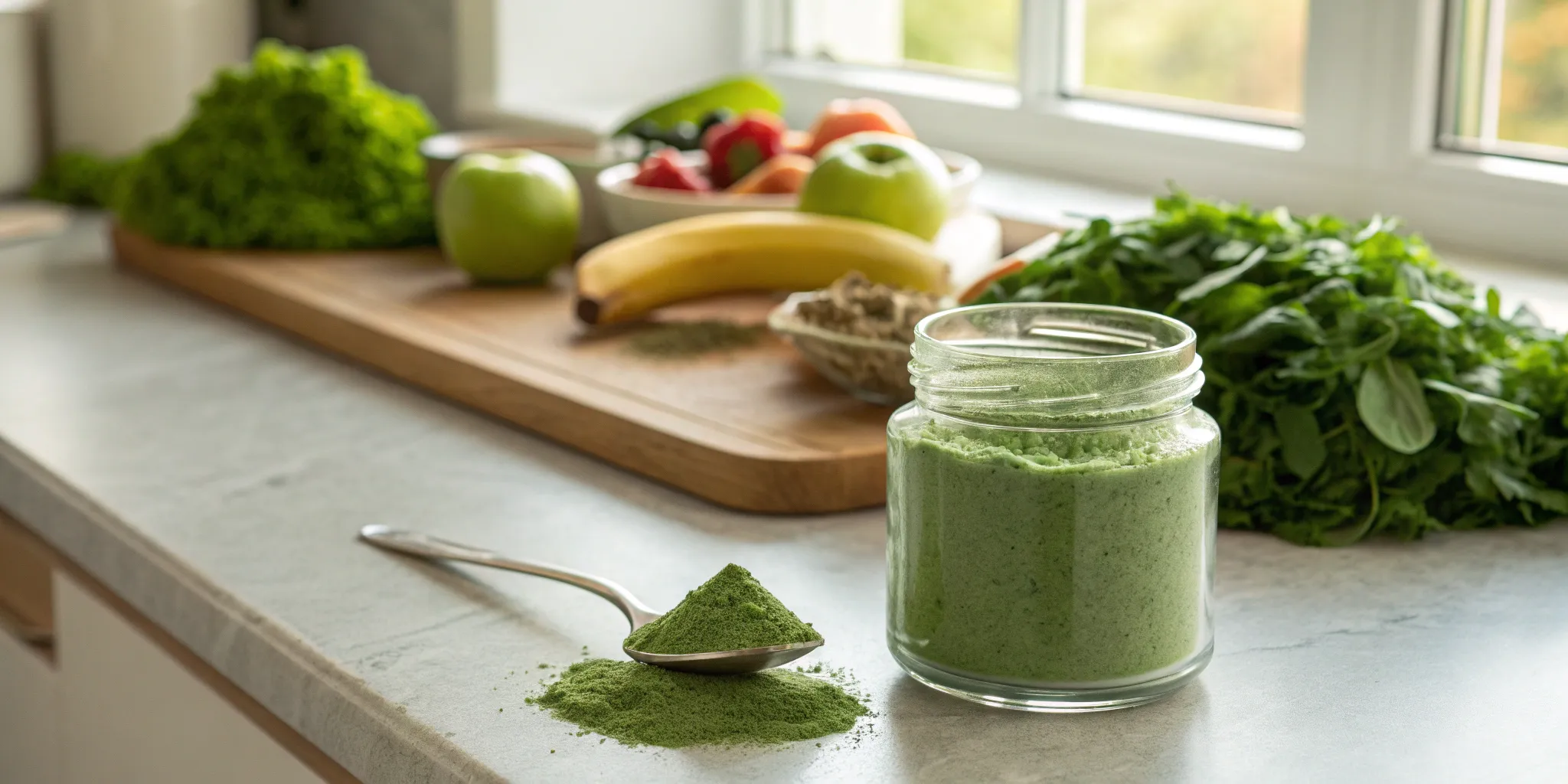
Key Takeaways
- Think of green powders as your nutritional insurance policy: They are an excellent way to fill in the gaps on days when your diet isn't perfect, but they don't replace the essential fiber and benefits of eating whole fruits and vegetables.
- Become a label detective to ensure quality: A great green powder will have a transparent, organic ingredient list. Watch out for red flags like artificial fillers, added sugars, and "proprietary blends" that hide the exact amounts of what's inside.
- Honestly evaluate your diet before investing: A green powder offers the most value if you have nutritional gaps or a hectic lifestyle gets in the way of healthy eating. It's a tool for convenience and consistency, not a requirement for an already veggie-packed diet.
What's Actually in Your Green Powder?
If you've ever wondered what's behind the vibrant color of these popular supplements, you're in the right place. At its core, a green powder is a dietary supplement made from a blend of dried or dehydrated plants. The idea is to pack a ton of nutrients from superfoods, fruits, and vegetables into a single, easy-to-use scoop that you can mix into water, smoothies, or other drinks.
Think of it as a nutritional shortcut. While it's not meant to replace the whole foods in your diet, it can be a fantastic way to fill in any gaps and ensure you're getting a wider variety of vitamins and minerals. Different brands create their own unique formulas, but most powders share a common goal: to deliver a concentrated dose of plant-based goodness. This is especially helpful on busy days when a perfectly balanced, veggie-packed meal just isn't in the cards.
What's typically inside
When you look at the ingredient list on a green powder, you'll usually find a mix of nutrient-dense foods. Common ingredients include leafy greens like spinach and kale, seaweeds such as spirulina and chlorella, and grasses like wheatgrass and barley grass. Many formulas also add in other vegetables like broccoli and beets, antioxidant-rich fruits like blueberries, and beneficial herbs.
These ingredients are chosen because they are packed with vitamins and minerals. For instance, many greens powders provide high levels of vitamin C, which has been linked to healthy immune system function and skin health. LiveGood's Organic Super Greens, for example, includes organic alfalfa grass, wheatgrass, and spirulina to help support your body's nutritional needs.
How they're made
The process of creating a green powder starts with whole, fresh ingredients. These fruits, vegetables, and grasses are typically dehydrated or freeze-dried to remove their water content while preserving as many of their nutrients as possible. Once dried, they are ground into a very fine powder that can dissolve easily in liquid. This careful process is what turns a pile of fresh produce into a convenient, shelf-stable supplement.
Manufacturers often state that their powders offer the nutritional equivalent of multiple servings of fruits and vegetables. While they are a concentrated source of nutrients, it's important to remember that they are a supplement, not a replacement. Whole foods contain fiber and other compounds that are essential for health. A green powder can help you fill in nutrient gaps, but it works best as part of a balanced diet.
The Big Promises of Green Powders
Walk down any health food aisle, and you'll see green powders promising to change your life. The labels often feature a long list of benefits, from boundless energy to a stronger immune system. It's easy to wonder if a single scoop can really do all that. While some claims can be over the top, many are based on the powerful nutrients packed inside. Let's look at the three biggest promises you'll see and what's behind them.
Claims about energy and vitality
One of the most common reasons people try green powders is for a natural energy lift without the jitters of caffeine. The idea is that by flooding your body with vitamins, minerals, and antioxidants, you're giving it the fuel it needs to function at its best. There is some research to support this. One study found that participants taking a greens supplement reported a significant increase in energy and vitality compared to those who took a placebo. This suggests that a daily scoop could help you feel more alert and ready to take on your day.
What they promise for digestive health
A happy gut is central to your overall wellness, and many green powders are formulated with this in mind. They often contain digestive enzymes, probiotics, or prebiotics-the fiber that feeds the good bacteria in your gut. These ingredients work together to help your digestive system run smoothly. According to the Cleveland Clinic, powders that include probiotics or prebiotics can lead to an improvement in your gut health. If you struggle with bloating or irregularity, a green powder with these additions might offer some gentle support.
Support for your immune system
We're all looking for ways to stay healthy, and a strong immune system is your best defense. Green powders are typically rich in immune-supporting vitamins and minerals, especially vitamin C and other antioxidants. These nutrients help protect your cells from damage and keep your immune response sharp. As WebMD points out, the high levels of vitamin C found in many green powders have been linked to healthy immune system function. Think of it as giving your body's defense team the resources it needs to do its job effectively.
Green Powder vs. Whole Foods: Which Is Better?
It's the big question on everyone's mind when they see a tub of green powder: can this really replace my daily salad? The honest answer is no, but that doesn't mean it has no place in your routine. Thinking of it as an "either/or" situation is the wrong approach. Whole foods and green powders serve different, yet complementary, purposes in a healthy diet.
Whole foods are the foundation. They provide the fiber, macronutrients, and complex blend of vitamins and minerals your body was designed to process. A high-quality green powder, on the other hand, acts as your nutritional insurance policy. It's a convenient way to fill in the gaps, especially on those days when a perfectly balanced, veggie-packed meal just isn't going to happen. Let's break down how they stack up in the areas that matter most.
A nutrient comparison
When you look at pure nutritional value, whole foods are the undisputed champion. A plate full of fresh or even frozen vegetables gives you a wide array of vitamins, minerals, and phytonutrients in their natural state. In fact, frozen produce is often just as healthy as fresh because it's flash-frozen at peak ripeness, locking in all that goodness. The main advantage of a green powder is concentration and variety. It would be difficult (and expensive) to buy and consume the sheer variety of ingredients found in a scoop of Organic Super Greens-like spirulina, chlorella, and organic alfalfa grass-every single day. A powder makes it simple to get a diverse range of powerful nutrients that you might otherwise miss.
Why fiber matters
Here's one area where whole foods have a clear edge: fiber. Fiber is essential for keeping your digestive system running smoothly, supporting heart health, and helping you feel full and satisfied after a meal. A diet rich in fruits, vegetables, and whole grains provides plenty of it. A typical serving of green powder, however, contains very little fiber because the manufacturing process removes most of the plant pulp. While you get the concentrated micronutrients, you miss out on the bulk. This is a key reason why a green powder should be seen as a supplement to a healthy diet, not a substitute for one. You still need to eat your veggies to get the dietary fiber your body needs.
How your body absorbs nutrients
How your body takes in and uses nutrients is a complex process. With whole foods, nutrients are bundled with fiber, enzymes, and other compounds that affect how they're absorbed. The process is slower and more sustained. Green powders, which are typically made from freeze-dried and ground produce, have their plant cell walls broken down. This can make certain vitamins and minerals more readily available for your body to absorb quickly. If your diet is already packed with a wide variety of fresh produce, you're likely getting everything you need. But for those of us with less-than-perfect diets, a powder can be an efficient way to get a dose of easily absorbable nutrients to fill any potential gaps.
What Does the Science Say?
When you look at the marketing for green powders, you see a lot of big promises. But what does the actual research say? The truth is, the science is a bit of a mixed bag, and it's important to understand the nuances. While comprehensive, long-term studies on specific green powder formulas are still emerging, there is a lot of research on the individual vitamins, minerals, and plant compounds they contain.
The general consensus among health professionals is that green powders can be a helpful tool to supplement a healthy diet, but they should never be considered a replacement for eating actual fruits and vegetables. Think of them as a nutritional safety net or a convenient way to get a concentrated dose of nutrients on a busy day. Let's break down what the research shows, where it's promising, and where it still has room to grow.
The current state of research
Most of the current research focuses on the benefits of a plant-rich diet in general, rather than on green powders specifically. Health experts agree that if your diet is already packed with a wide variety of fruits and vegetables, you are likely meeting your nutrient needs. In that case, a green powder might not be necessary for you. However, for the many people who struggle to get their five-a-day, these powders can help fill in the gaps. According to the Cleveland Clinic, they are best viewed as a supplement to, not a substitute for, a diet rich in whole foods.
Studies on key ingredients
This is where things get more interesting. While studies on finished green powder blends are limited, many of the individual ingredients found in high-quality powders are very well-researched. Ingredients like spirulina, chlorella, barley grass, and alfalfa have been studied for their antioxidant, anti-inflammatory, and detoxifying properties. For example, one randomized, controlled trial found that a greens supplement had a positive effect on energy levels compared to a placebo. The science strongly supports the health benefits of these superfoods on their own, which is why they are included in comprehensive formulas like LiveGood's Organic Super Greens.
Where the evidence falls short
The main critique from scientists and dietitians is that green powders can't fully replicate the benefits of eating whole plants. Whole foods contain fiber, water, and a complex matrix of nutrients that work together in ways we are still discovering. A powder simply can't match that. An occasional scoop is unlikely to cause harm, but it's important to manage expectations. As one dietitian explains, green powders offer "no proven benefits" if you don't have a specific nutrient deficiency. The key takeaway is to see them for what they are: a convenient supplement to support an already healthy lifestyle, not a magic fix for a poor diet.
Are Green Powders Worth the Money?
Let's talk about the price tag. When you see a tub of green powder, it can feel like a big purchase. It's a valid question to ask if the benefits justify the cost, especially when you're trying to stick to a budget. The answer really depends on what you're comparing it to and what you value most-be it convenience, nutrient density, or simply filling the gaps in your daily diet.
Instead of looking at it as just another grocery item, think of it as an investment in your daily wellness routine. To figure out if it's a smart investment for you, we need to break down the cost, compare it to other options, and look at the real value you get from each scoop.
Breaking down the cost per serving
On average, many green powders on the market can cost over a dollar per serving. While that might sound like a lot for a daily habit, consider what you're getting for that price. Each scoop is packed with a wide array of vitamins, minerals, and antioxidants from sources that might be difficult or expensive to buy individually.
When you think about it, that daily dollar is often less than a morning coffee or a vending machine snack. The difference is that you're putting that money toward something that directly supports your body's needs. It's a simple, quick way to get a concentration of nutrients without having to plan, shop for, and prepare a dozen different superfoods every single day.
How the cost compares to whole foods
There's no denying that buying whole fruits and vegetables, especially frozen, is incredibly cost-effective. A serving of frozen spinach or berries can cost just a fraction of a serving of green powder. If your diet is already rich and varied, you may not need the extra support. However, the real value of a green powder isn't in replacing a single vegetable-it's in providing the nutritional equivalent of a whole garden's worth of produce.
To get the same variety of ingredients found in a quality green powder-like spirulina, chlorella, ashwagandha, and wheatgrass-you'd have to buy each one separately. That would not only be far more expensive but would also lead to a pantry full of half-used bags. A green powder simplifies this, giving you a diverse range of nutrients in one easy step.
The value of LiveGood's Organic Super Greens
This is where the right green powder can be a game-changer for both your health and your wallet. While many brands are expensive, LiveGood's Organic Super Greens is designed to be accessible. It's often cheaper to use a high-quality powder than to buy all the individual superfood ingredients separately, and our formula is packed with the best ones.
Greens powders can help you get important nutrients, especially if you don't eat enough fruits and vegetables every day. With our product, you get a blend of organic alfalfa grass, barley grass, oat grass, and powerful adaptogens in every scoop. And with the LiveGood Membership, the cost per serving drops even further, making it one of the most affordable ways to consistently give your body the powerful nutrition it needs to thrive.
Why Not All Green Powders Are the Same
Walking down the health aisle or scrolling online, you'll see a dizzying number of green powders, all promising to make you healthier. But here's the thing: what's inside that tub can vary wildly from one brand to the next. The difference between a high-quality formula and a scoop of sugary grass clippings comes down to the details. Some companies pack their powders with premium, organic ingredients, while others use cheaper fillers and make bold claims they can't back up.
This is where you, as a smart shopper, come in. Understanding what separates the good from the not-so-good is key to making sure you're spending your money on something that actually supports your health. It's not just about the price tag or the flashy packaging. You need to look closer at how the product is made, where the ingredients are sourced from, and whether the marketing promises are realistic. By paying attention to these three areas, you can find a green powder that genuinely adds value to your wellness routine.
Look for quality manufacturing and testing
The supplement industry can feel a bit like the Wild West. Because regulations aren't always as strict as they are for food or medicine, the quality of what you get can be inconsistent. This is why manufacturing practices are so important. A reputable company will be transparent about how its products are made and will often go the extra mile to ensure purity and safety.
Some of the best manufacturers volunteer for third-party testing to verify what's on the label is actually in the container. This process helps protect you from accidentally ingesting contaminants or banned substances. At LiveGood, we prioritize the highest quality ingredients and careful formulation, so you can feel confident about what you're putting into your body every single day.
Where ingredients come from
If you look at the labels of a few different green powders, you'll notice the ingredient lists can be very different. Common ingredients include everything from leafy greens like spinach and kale to seaweeds like spirulina and grasses like wheatgrass. But the quality and sourcing of these ingredients matter just as much as the ingredients themselves. Are they organic? Grown in nutrient-rich soil?
A premium powder like our Organic Super Greens uses ingredients chosen for their quality and nutritional value. Cheaper powders, on the other hand, might use non-organic sources or rely on less nutrient-dense fillers. Always check the label to see exactly what you're getting and where it comes from.
Marketing claims to watch out for
Many green powders come with some pretty big promises, often claiming to provide the nutritional equivalent of multiple servings of fruits and vegetables. While the individual ingredients in these powders are certainly healthy, the scientific evidence on the health effects of the powders as a whole is still developing. Be wary of any product that claims to be a magic bullet for your health or a complete replacement for whole foods.
Instead of falling for the hype, look for companies that are honest about what their products can do. A green powder is a supplement-it's meant to supplement a healthy diet, not replace it. Focus on the quality of the ingredients and the integrity of the brand, not just the flashy claims on the front of the package.
Who Really Benefits from a Green Powder?
While the idea of getting all your daily greens in one scoop sounds amazing, a green powder isn't a one-size-fits-all solution. The truth is, its value really depends on you-your diet, your schedule, and your personal health goals. Think of it less as a magic pill and more as a helpful tool in your wellness toolkit. For some, it's an essential daily supplement that bridges nutritional divides. For others, it might not be necessary at all. Let's figure out which camp you fall into by looking at a few common scenarios where a green powder can make a real difference.
When your diet has gaps
Let's be honest: hitting your daily quota of fruits and vegetables every single day can be tough. If you know your diet isn't as packed with leafy greens and colorful produce as you'd like, a green powder can be a fantastic safety net. As experts point out, "Greens powders can help you get important nutrients, especially if you don't eat enough fruits and vegetables every day." They work to fill in the blanks, supplying a concentrated dose of vitamins, minerals, and antioxidants you might be missing. This is especially helpful if you're a picky eater or find that fresh produce often goes bad in your fridge before you can eat it. A high-quality supplement like LiveGood's Organic Super Greens can give you peace of mind that you're supporting your body, even on days when your plate isn't perfect.
How your lifestyle plays a role
Your daily habits have a huge impact on your nutritional needs. If you're someone who consistently eats a wide variety of whole foods, you might already be getting everything your body requires. According to the Cleveland Clinic, "If you're eating an abundance of fruits and vegetables, then you're likely meeting your nutrient needs, then powdered greens may not be necessary." However, many of us have lifestyles that lead to less-than-ideal eating habits, whether due to stress, work, or simply not having the time to cook. If your diet is inconsistent, a green powder can provide a stable source of key nutrients to help you feel your best. It's not about replacing whole foods but complementing your diet when your lifestyle makes it hard to stay on track with recommended dietary guidelines.
For times you need convenience
For many people, the biggest benefit of a green powder is pure convenience. Life gets busy, and finding time for healthy meal prep isn't always realistic. Green powders are incredibly "easy to use and can be taken on the go, which is helpful for busy schedules or when traveling." Instead of trying to pack a salad for your flight or find a healthy option during a hectic workday, you can simply mix a scoop of powder into water or a smoothie. This makes it a practical choice for busy parents, students, frequent travelers, and anyone juggling a demanding schedule. It's a simple, two-minute step that ensures you're still giving your body valuable nutrients without adding another complicated task to your to-do list.
How to Choose the Right Green Powder
With so many options on the shelf, picking the right green powder can feel overwhelming. But it doesn't have to be. A little know-how can help you see past the flashy marketing and find a product that genuinely supports your health goals. The key is to look at three things: what's inside the container, what it costs, and who's making it. Think of yourself as a detective for your own wellness-your job is to find the clues that point to a high-quality, effective supplement. By focusing on the ingredients, price, and company reputation, you can confidently choose a green powder that's worth your money and adds real value to your daily routine.
Red flags on the ingredient list
The first place to start your investigation is the ingredient list. A quality green powder should be packed with recognizable, whole-food ingredients. Be wary of products with long lists of synthetic vitamins, artificial sweeteners, or unnecessary fillers like rice bran or maltodextrin. These additives can dilute the nutritional value and may even cause digestive upset. Another red flag is "proprietary blends" that don't disclose the amount of each ingredient. You want transparency. Look for a clean, simple label that proudly lists organic grasses, algae, and vegetables. A great example is a product like LiveGood's Organic Super Greens, where you can clearly see what you're getting in every scoop.
What to consider about the price
Next, let's talk about cost. Green powders can range from surprisingly cheap to shockingly expensive, but a higher price tag doesn't always guarantee better quality. Instead of just looking at the total price, calculate the cost per serving to get a true sense of the value. A tub that costs $80 for 30 servings is much pricier than a $20 tub with the same number of servings. Consider that buying a green powder is often more economical than purchasing all the individual superfoods separately. The goal is to find a product that fits your budget without skimping on quality ingredients. You shouldn't have to overpay for foundational health.
Checking the company's reputation
Finally, do a quick background check on the company. Since the supplement industry isn't tightly regulated by the FDA, it's up to brands to prove their products are safe and effective. The best companies are transparent about their manufacturing processes and invest in third-party testing. This means an independent lab has verified that the ingredients on the label are actually in the product and that it's free from harmful contaminants. Look for this information on the company's website. A brand that is open about its quality control and stands behind its products is one you can feel good about supporting.
The Final Question: Is a Green Powder Right for You?
Deciding whether to add a green powder to your routine is a personal choice. There's no single right answer, but by looking at your own health, habits, and goals, you can figure out if it's a smart investment for you. The goal isn't to find a magic fix but to find a sustainable way to support your well-being.
Factors in your personal health
First, take an honest look at your plate. If you consistently eat a wide variety of fresh fruits and vegetables every day, you might already be getting the nutrients your body needs. A green powder is meant to supplement a healthy diet, not replace it. Think of it as a nutritional safety net for days when your diet isn't perfect or a way to fill specific gaps. Your individual needs are unique, shaped by your lifestyle, activity level, and overall health. For some, a powder is a convenient way to get a concentrated dose of vitamins and minerals, while for others, a high-quality multivitamin might be a better fit for their specific goals.
Questions to ask yourself first
Before you add a green powder to your cart, pause and ask yourself a few key questions. What are you hoping to achieve? Are you looking for more energy, better digestion, or just an easier way to get your greens? It's also important to pay attention to how your body responds. A great way to do this is to track how you feel before you start and check in again after a few weeks of consistent use. Do you notice a real difference in your energy levels or digestion? Is it making your healthy habits easier to stick with? Answering these questions will help you decide if a product like LiveGood's Organic Super Greens is truly serving you.
Other ways to get your greens
A green powder is just one tool in your wellness toolkit. Don't forget about the power of whole foods, which offer benefits like fiber that powders often lack. You can easily add more greens to your day by tossing a handful of spinach into your morning smoothie, adding sliced peppers to your lunch, or steaming some broccoli with dinner. And don't overlook the freezer aisle! Frozen fruits and vegetables are picked at peak ripeness, so they are packed with nutrients and can be a convenient and affordable option. The best approach is one that combines a balanced diet with smart, targeted supplementation when you need it.
Related Articles
- Are Green Powders a Waste of Money?
- Do Powdered Greens Work?
- Greens Powder: Are There Health Benefits?
- Are Greens Powders Actually Beneficial? Our Dietitian Weighs In
- Greens Powders: Benefits, Ingredients, and Effectiveness
Frequently Asked Questions
Can a green powder completely replace eating vegetables? Think of a green powder as your nutritional insurance policy, not a replacement for your salad. While it delivers a fantastic concentration of vitamins and minerals from a wide variety of plants, it doesn't have the fiber or water content that whole vegetables provide. Your body needs that fiber for healthy digestion and feeling full. The best approach is to continue eating your veggies and use a green powder to fill in any gaps on days when your diet isn't perfect.
How should I take my green powder for the best results? The simplest way is to mix a scoop with a glass of water or juice and drink it first thing in the morning to start your day with a dose of nutrients. If you're not a fan of the earthy taste, blending it into a smoothie is a great option. The fruit and other ingredients will easily mask the flavor, and you can add protein or healthy fats to create a more complete meal. The most important thing is consistency, so find a method that you enjoy and can stick with daily.
Will I feel a difference right away? Unlike a cup of coffee, a green powder doesn't typically give you an immediate, noticeable jolt. The benefits are more gradual and build over time. It's about consistently giving your body a foundation of powerful plant nutrients. After a few weeks of regular use, you might notice more sustained energy throughout the day or that your digestion feels more regular. Pay attention to these subtle shifts in your overall well-being.
Is it okay to take a green powder along with my daily multivitamin? For most people, yes. A multivitamin and a green powder serve different functions. A multivitamin is designed to deliver specific amounts of essential vitamins and minerals, while a green powder provides a much broader spectrum of nutrients, antioxidants, and plant compounds from whole food sources. They can work well together to cover your nutritional bases. However, it's always a good idea to check the labels for any high-dose overlapping ingredients and talk with your doctor to ensure your supplement routine is right for you.
What if I don't like the taste? This is a really common concern, and it's true that the taste of green powders can take some getting used to. The easiest fix is to blend your scoop into a smoothie with ingredients that have stronger flavors, like a banana, pineapple, or a handful of berries. You can also try mixing it with a small amount of water and taking it like a quick shot to get it over with. A splash of lemon juice can also help brighten the flavor and cut through the earthiness.